Fabrics & Quality
240 GSM T-Shirt: Is It Actually Better, or Are Brands Just Selling You a Number?
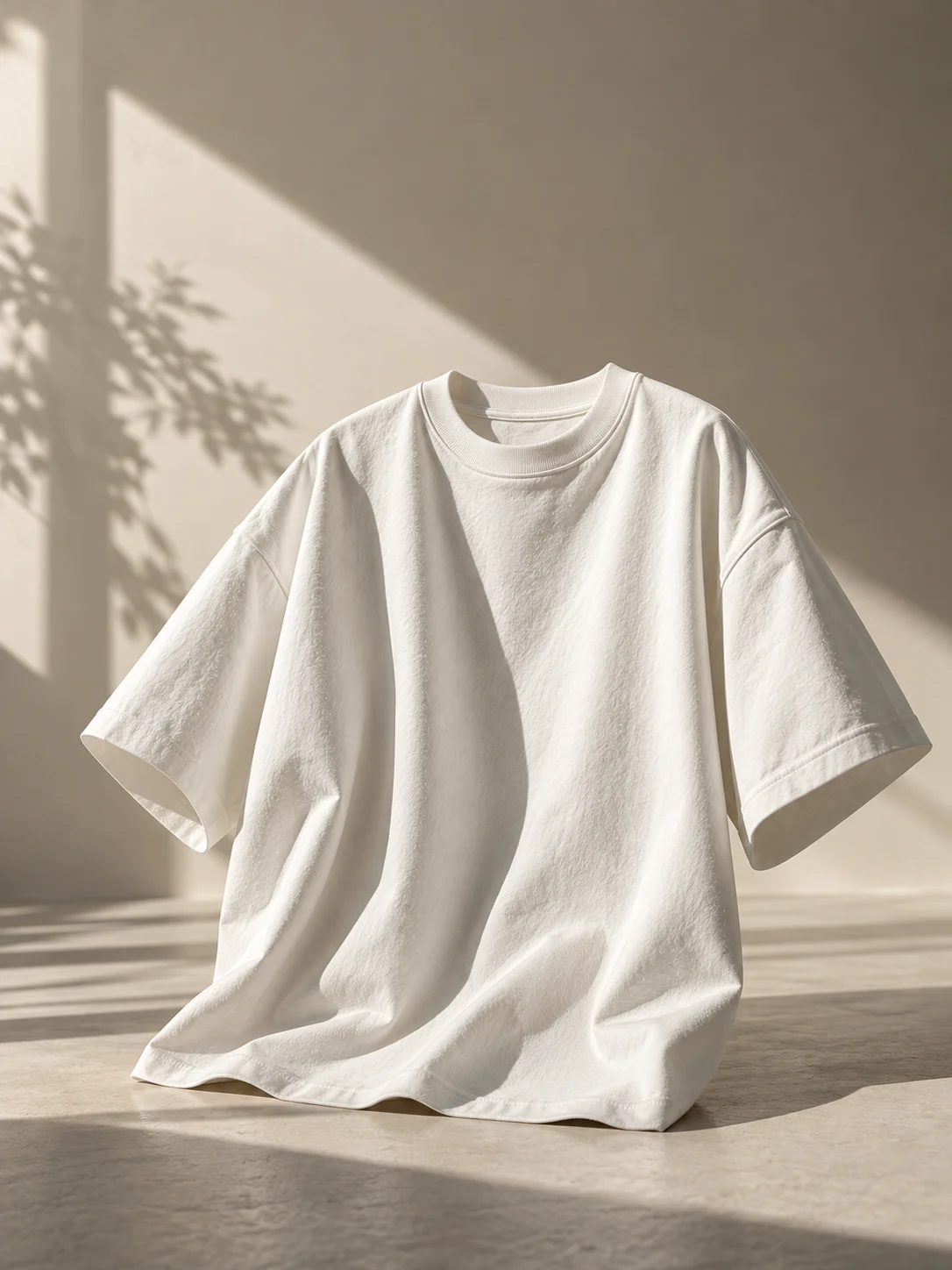
The number on the tag that suddenly seems to matter
You’re shopping for a T-shirt. One says 180 GSM. Another says 200 GSM. Then you see 240 GSM and, suddenly, it sounds more premium.
But here’s the part most people miss: GSM is not a quality score.
GSM stands for grams per square metre. It simply tells you how much one square metre of fabric weighs. A 240 GSM fabric weighs 240 grams per square metre.
That makes 240 GSM a substantially heavier fabric than a 160 or 180 GSM fabric, but it does not automatically make the garment better. Fibre quality, yarn, knitting, finishing, stitching, fit and construction all influence how a T-shirt actually feels and performs.
And that distinction matters.
Because if you're buying a T-shirt based only on the biggest GSM number on the product page, you're not really judging the garment. You're judging one specification.
So what does 240 GSM actually feel like?
Compared with a lighter T-shirt made from a similar fabric construction, 240 GSM generally feels more substantial in the hand.
It has more body. It tends to sit differently on the body rather than falling completely flat. It can provide a more structured silhouette, which is particularly useful for oversized and boxy T-shirts where the shape of the garment is part of the design.
This is one reason 220–260 GSM fabrics appear frequently in heavyweight and oversized T-shirts. Current Indian fashion discussions also show buyers specifically looking for the 220–260 GSM range when they want a structured oversized fit rather than a thin, loose or shapeless garment.
But heavier does not mean universally better.
Is higher GSM always better?
No.
And this is probably the most important thing to understand before buying a heavyweight T-shirt.
Imagine two T-shirts. One is 240 GSM and poorly constructed. The other is 180 GSM and made with better fibre, better yarn, better finishing and better construction.
The 240 GSM T-shirt isn't automatically the better garment.
GSM tells you about fabric weight. It does not tell you everything about the fabric.
A higher GSM can give a garment more structure and substance, but it can also make it warmer and slower to dry. A lighter fabric can be more comfortable in hot weather and still be exceptionally well made.
Even among heavyweight T-shirts, opinions vary. Some buyers specifically prefer 220–260 GSM for the structure and feel, while others find heavyweight T-shirts uncomfortable in warmer conditions and prefer lighter fabrics.
So the better question isn't, “What's the highest GSM I can buy?”
It's:
“What GSM makes sense for the garment I actually want to wear?”
Why does GSM matter so much for oversized T-shirts?
Oversized clothing isn't simply about making a normal T-shirt wider.
The fabric has to work with the silhouette.
A lightweight fabric can create a softer, more fluid look. That can be exactly what you want. But when the design calls for a structured oversized or boxy silhouette, a more substantial fabric can help the garment hold its shape.
This is especially noticeable around the shoulders, sleeves and body.
A dropped shoulder can look intentional when the fabric has enough body to support it. The same pattern in a very lightweight fabric can fall differently and create a much softer silhouette.
That is why GSM is useful when shopping for oversized T-shirts — not because a higher number automatically means higher quality, but because fabric weight influences how the design behaves.
180 GSM vs 200 GSM vs 240 GSM
Think of GSM as a spectrum rather than a quality ranking.
A lighter 160–180 GSM T-shirt can be useful when you want something breathable, lightweight and easy to layer.
Around 190–220 GSM, you start moving toward a more substantial everyday fabric, depending on the fibre and construction.
At around 240 GSM, the fabric becomes noticeably more substantial and is well suited to structured, heavyweight and oversized silhouettes.
That does not mean 240 GSM is “better” than 180 GSM.
It means they are designed to create different experiences.
A lightweight summer T-shirt and a structured oversized streetwear T-shirt are solving different problems.
Why does a 240 GSM T-shirt look more premium?
This is where things get interesting.
The perception of quality isn't created by GSM alone. It comes from the combination of weight, hand feel, drape, construction, finishing and fit.
A substantial fabric can give a T-shirt a more deliberate silhouette. It can make the garment feel less flimsy in the hand and can reduce the very lightweight, clingy appearance that some shoppers dislike.
For white and other lighter colours, fabric construction and weight can also influence how opaque the garment feels.
But putting “240 GSM” on a product page doesn't magically create luxury.
If the collar stretches, the stitching is poor, the fit is wrong or the fabric feels rough, the number becomes almost irrelevant.
Premium isn't a number. It's the sum of the details.
Is 240 GSM comfortable in India?
This depends on the person, the fabric, the construction and where you're wearing it.
A 240 GSM cotton T-shirt will generally feel more substantial than a lightweight 160–180 GSM tee. In peak outdoor heat, some people may prefer a lighter fabric. In air-conditioned environments, evenings or for a structured streetwear silhouette, a heavier fabric can make more sense.
There is no universal “best GSM for India.”
Climate, humidity, activity level and personal preference all matter.
This is also why blanket claims such as “240 GSM is perfect for every Indian summer” should be treated carefully. A fabric's fibre content, knit construction and finish matter alongside its weight.
What should you actually look for when buying a premium T-shirt?
Start with GSM, but don't stop there. Look at the fibre. Look at the yarn. Look at the construction. Look at the finish. Look at the collar. Look at the stitching. Look at the measurements. Look at the silhouette.
Then ask yourself how the T-shirt is supposed to behave.
Do you want something extremely lightweight?
Something soft and fluid?
Something structured?
Something oversized?
Something designed primarily for hot outdoor weather?
Or something with enough body to create a deliberate streetwear silhouette?
Once you answer that, GSM becomes much more useful.
Instead of chasing the highest number, you're choosing the right fabric for the right purpose.
Why VELVETO uses 240 GSM
For VELVETO, 240 GSM isn't there simply because “heavyweight” sounds premium.
Our approach starts with the garment we want to create.
The goal is a substantial oversized silhouette with a clean structure, considered proportions and a premium hand feel — without turning the T-shirt into something unnecessarily heavy.
That's why fabric weight is considered alongside fibre, finish, fit and construction.
Our 240 GSM T-shirts use 100% combed compact cotton, with a double bio-wash and super-soft silicone finish, designed around an oversized silhouette with dropped shoulders.
The number tells you the fabric weight.
The rest tells you what the garment actually is.
The real meaning of “premium”
The next time you see “240 GSM” on a T-shirt, don't automatically think:
Higher GSM = higher quality.
Think:
What is this fabric weight being used to achieve?
Because a great T-shirt isn't made premium by adding a bigger number to the product description.
It becomes premium when the fabric, fit, construction and finishing work together.
And that's ultimately what you should be paying attention to.
Luxury should be felt, not announced.