Fit & Sizing
The Oversized T-Shirt Test: Do You Actually Know If Yours Fits Right?
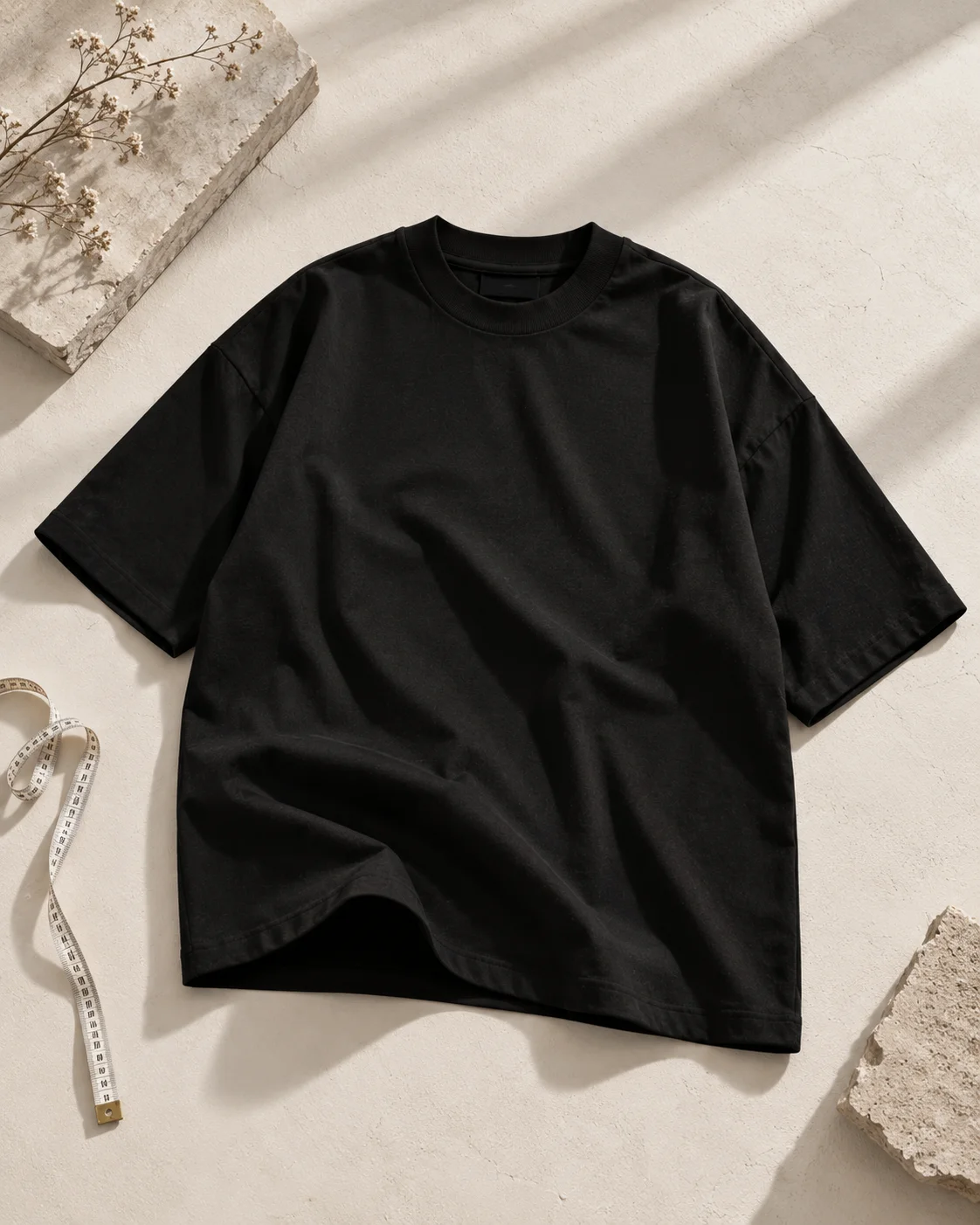
The Oversized T-Shirt Test: Do You Actually Know If Yours Fits Right?
Quick test. Pull up a photo of yourself in your "oversized" t-shirt. Now ask: is it oversized, or is it just big?
Most guys can't actually tell the difference — and it's not their fault. Brands have spent three years slapping "oversized fit" on any t-shirt that's cut a size larger, without changing anything else about the pattern. The result is a tee that isn't oversized at all. It's just loose, in a way that reads as careless instead of intentional.
Real oversized fit is a design decision, not a sizing shortcut. Here's what actually separates the two.
The four measurements that matter (not the size label)
1. Shoulder drop. This is the giveaway. On a properly oversized tee, the shoulder seam sits 2–4 inches past your actual shoulder, so the sleeve visibly "drops" off the body. If your shoulder seam is sitting close to where a regular tee's would sit, you're not wearing oversized — you're wearing a big regular tee. This one measurement does more to create the look than anything else on the garment.
2. Chest ease. Oversized doesn't mean tent. There should be 4–6 inches of room beyond your actual chest measurement — enough to hang away from the body and create that structured, boxy silhouette, not so much that the fabric just pools. If you can gather a fistful of extra fabric at your sides, that's not oversized, that's oversized-shaped, and there's a difference.
3. Body length. This is where most "oversized" tees quietly fail. The length needs to be proportional to the extra width — usually landing mid-to-low hip. Too short, and the extra chest room just makes you look wider. Too long, and you've accidentally dressed like you're borrowing your older brother's college tee.
4. Sleeve width. The sleeve should be roomy but not baggy at the bicep, with the hem sitting somewhere between mid-bicep and elbow. Sleeves that are just "regular fit sleeves on a bigger tee" are the most common tell that a brand didn't actually re-pattern the garment — they just scaled it up.
Why the fabric matters as much as the cut
Here's the part nobody tells you: even a perfectly cut oversized tee will look wrong in the wrong fabric. Lightweight cotton (under 180 GSM) doesn't have the structure to hold a boxy shape — it drapes flat and starts looking like you're wearing a bag by the second hour. That's why heavier, combed compact cotton in the 220–240 GSM range is the standard for oversized fits that actually hold their silhouette instead of collapsing. Weight isn't just about how "premium" a tee feels in your hands — it's doing structural work you don't notice until it's missing.
Run the 60-second check on your own tee
If you answered "just loose fabric" or "flaps" to any of these, you own a big t-shirt, not an oversized one. Nothing wrong with that — but it's worth knowing which one you're actually wearing before you buy your next.
The takeaway
Oversized fit is engineering, not a size chart shortcut. Shoulder drop, chest ease, proportional length, structured sleeves, and fabric weight all have to work together — drop any one of them and the whole silhouette falls apart. Next time you're shopping for an oversized tee, skip the size label entirely and check these four points instead. It's the only way to know if you're buying the look, or just buying a bigger shirt.