Style & Culture
Old Money Style on a ₹2,000 Budget: What Actually Works
You Do Not Need to Be Rich to Dress Expensively
The internet has made old money style look considerably more expensive than it actually needs to be.
Scroll through enough outfit videos and you will eventually see the same formula: cream trousers, a linen shirt, loafers, a vintage-looking watch and some perfectly positioned sunlight. The outfit looks effortless. The price tag behind the outfit often does not.
But the interesting thing about this aesthetic is that its visual language does not depend entirely on expensive clothing.
It depends on restraint.
Clean colours. Sensible proportions. Minimal branding. Good-looking fabric. Clothes that are clean, pressed and maintained. Pieces that work together instead of fighting for attention.
That is why a ₹2,000 budget can actually be useful. It forces you to understand what makes an outfit look refined instead of simply buying expensive versions of everything.
Start With the Silhouette, Not the Brand
The first thing people notice about clothing is not the fibre composition printed on the inside label.
They notice the silhouette.
A T-shirt that sits correctly on your shoulders, has a clean neckline and falls naturally over the body can look considerably more polished than a much more expensive T-shirt that is too tight, too long or badly shaped.
The same applies to trousers.
The waist should sit properly. The leg should have enough room to move. The hem should not create an unnecessary pile of fabric around your shoes.
This is why spending your entire ₹2,000 on one supposedly premium garment can be less effective than buying two or three simple pieces that actually fit.
Old money-inspired dressing is not about making every garment oversized or slim. It is about making the proportions look deliberate.
Your Colour Palette Can Make a Cheap Wardrobe Look More Expensive
You do not need a complicated colour theory lesson to start.
Begin with colours that naturally work together.
Navy, cream, ivory, white, charcoal, brown, stone, olive and muted blue are useful because they can be combined repeatedly without making your wardrobe feel repetitive.
Imagine owning one navy trouser and three tops in white, cream and light blue.
You already have several combinations.
Now imagine buying three tops in completely unrelated colours because each one looked interesting individually. You may have technically bought the same number of clothes, but you have created a wardrobe that is much harder to use.
A refined wardrobe is often less about having more options and more about having options that cooperate.
Where Your First ₹2,000 Should Actually Go
If ₹2,000 is your total budget, do not try to recreate an entire Pinterest outfit.
Build one useful combination.
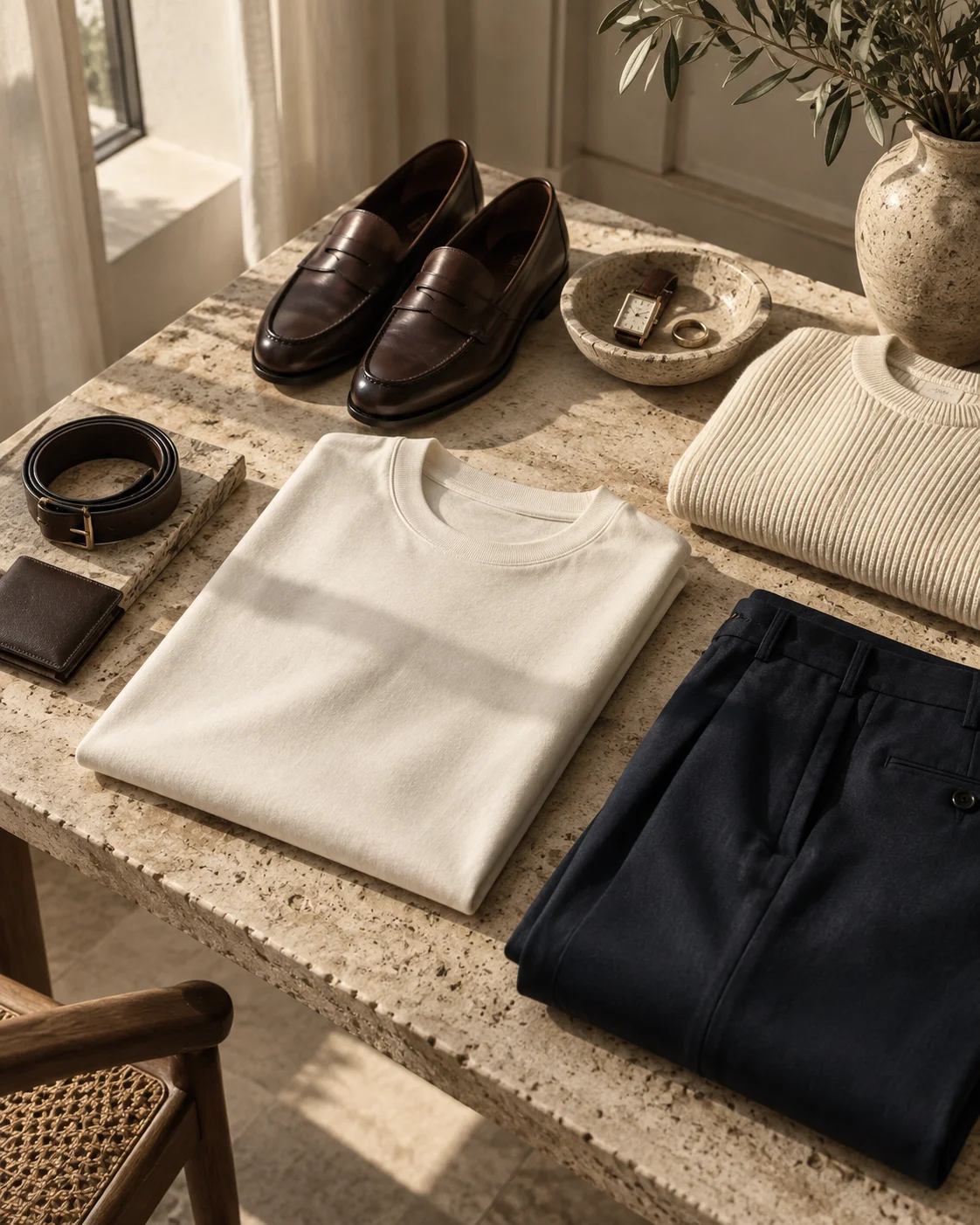
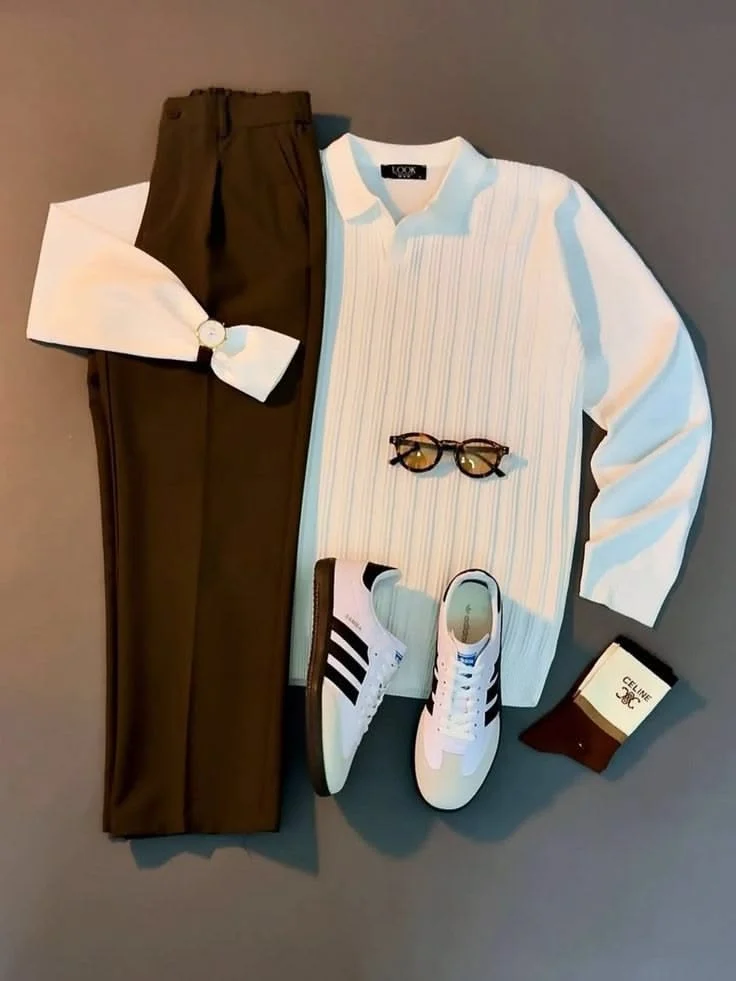
A solid neutral T-shirt can form the foundation. Pair it with trousers in navy, charcoal, beige or dark brown. Finish with clean minimal sneakers if that is what you already own.
If you already have suitable trousers, put more of the budget into the top.
If you already own several good tops, improve the trousers.
The important principle is to identify the weakest part of your existing wardrobe rather than automatically buying another version of something you already have.
That is how a small budget becomes useful.
The T-Shirt Is More Important Than People Think
A plain T-shirt looks simple because there is nowhere for poor construction to hide.
There is no graphic covering the fabric. There is no complicated pattern distracting the eye. There is no elaborate tailoring doing the work.
The neckline, shoulders, sleeve proportion, fabric surface and drape are exposed.
That makes the T-shirt one of the easiest garments through which to understand quality.
You do not necessarily need the most expensive cotton available. You need a fabric that feels substantial enough for the intended silhouette, holds its shape and does not immediately look tired after washing.
For a refined wardrobe, colours such as ivory, cream, white, navy, charcoal and black are particularly versatile because they can move between casual and more polished outfits.
This is also why a well-made heavyweight or structured T-shirt can become more useful than several trend-driven pieces.
Do Not Waste Your Budget on the Logo
One of the easiest ways to destroy a ₹2,000 budget is to spend most of it paying for recognition.
A visible logo can be part of fashion, but it does not automatically make an outfit look sophisticated.
If your objective is understated dressing, the money is generally better directed towards the garment itself.
Look at the neckline.
Look at the stitching.
Look at how the fabric falls.
Look at whether the garment keeps its shape.
Look at whether you can wear it with at least three different outfits.
Those details will influence the appearance of the outfit long after the logo has stopped being interesting.
Fabric Matters, But Do Not Fall for Fabric Buzzwords
“100% cotton” does not automatically mean excellent quality.
Neither does a high GSM automatically mean premium quality.
Neither does a luxury-sounding fibre name guarantee that a garment is well made.
Fabric weight, fibre quality, yarn construction, finishing and garment construction all contribute to how a piece feels and performs.
For someone shopping on a ₹2,000 budget, the practical approach is simpler.
Touch the fabric.
Look at its surface.
Check whether it is excessively shiny or thin.
Look at the seams.
Check the neckline.
Look at how the garment behaves when you move.
A good-looking garment does not need a complicated technical explanation printed beside it.
The ₹2,000 Mistake Most People Make
The biggest mistake is trying to look expensive instead of trying to look well dressed.
Those are not the same thing.
When people try too hard to communicate wealth, the outfit often becomes overloaded. The watch becomes too prominent. The belt becomes too obvious. The shirt has a conspicuous logo. The trousers are aggressively tailored. The shoes are excessively polished.
Suddenly the outfit is communicating one thing very loudly.
“I am trying to look rich.”
The better approach is almost the opposite.
Make every element quieter.
Let the silhouette create the impression.
Let the fabric create texture.
Let the colour palette create cohesion.
Let the clothes look like clothes you would actually wear even if nobody knew their price.
What You Should Buy Cheap and What You Should Eventually Upgrade
Not every item deserves the same level of investment.
Simple T-shirts can be found across a wide range of prices, and a sensible budget version can work perfectly well while you are building your wardrobe.
The same can be true of basic trousers, especially when the fit is good.
Accessories are more dependent on quality and longevity. A poorly made belt or uncomfortable shoe can make an otherwise clean outfit feel less considered.
This means you can start inexpensive and upgrade gradually.
Your first wardrobe does not need to be your final wardrobe.
The objective is to create a strong foundation and replace pieces when you actually understand what you want from them.
Second-Hand Can Make the ₹2,000 Budget Go Further
If you are comfortable buying pre-owned clothing, your budget can stretch considerably further.
The important part is to inspect the garment rather than becoming obsessed with the label.
Check the collar.
Check the cuffs.
Check the seams.
Look for pilling, stains, stretching and fabric damage.
A second-hand wool sweater in excellent condition can be more useful than a brand-new synthetic sweater bought simply because it carries the right aesthetic.
The same principle applies to trousers, jackets and overshirts.
Old money-inspired dressing works particularly well with garments that already look established rather than aggressively new.
Your Shoes Do Not Need to Be Loafers
Loafers are strongly associated with classic menswear, but you do not need to buy them just because the internet says they belong in an old money wardrobe.
If you already own clean, understated sneakers, use them.
White, cream, brown, black and muted neutral sneakers can work with a simple T-shirt and tailored or relaxed trousers.
The goal is not to reproduce one historical wardrobe.
It is to build a modern wardrobe with the same principles of restraint.
Buy the shoe you will actually wear.
Grooming Costs Nothing Compared With a New Wardrobe
There is another part of looking refined that clothing cannot solve.
Presentation.
Clean shoes. Neat hair. Clean nails. Clothes without obvious stains. A T-shirt that has not been left crumpled in a chair for two days.
None of these things requires a luxury budget.
This is important because clothing cannot compensate for poor maintenance.
A ₹1,500 outfit that is clean, pressed and well proportioned can look considerably more intentional than a ₹15,000 outfit that is wrinkled, poorly fitted and covered in unnecessary accessories.
A Better Way to Think About the ₹2,000 Challenge
Do not ask, “How can I look rich for ₹2,000?”
Ask, “How much refinement can I create with ₹2,000?”
That change in question leads to better decisions.
You stop looking for fake luxury shortcuts.
You stop buying clothes because they are labelled “old money.”
You start examining fabric.
You start noticing fit.
You start understanding why certain colours work together.
You start building a wardrobe rather than collecting outfits.
And that skill stays useful even when your budget eventually increases.
The Quiet Luxury Test
Before buying something, put it through a simple test.
Can you wear it with at least three things you already own?
Does the fit look intentional?
Does the fabric look appropriate for the price?
Would the outfit still work if the brand name disappeared?
If the answer is yes, you probably have something useful.
If the entire appeal disappears when the logo is removed, you may not be buying the garment for the right reason.
What ₹2,000 Can Actually Buy You
₹2,000 will not create a complete luxury wardrobe.
It does not need to. It can create a strong starting point.
One excellent neutral T-shirt combined with trousers you already own can create several outfits. A carefully chosen pair of trousers can upgrade multiple existing tops. A simple overshirt can transform the same T-shirt from basic to layered and considered.
The trick is to buy pieces that multiply what you already own.
That is the real secret behind affordable style.
Old Money Style Is Not a Price Tag
The most useful thing about this aesthetic is also the thing that gets lost most often online.
It is not really about looking wealthy. It is about looking intentional.
A quiet colour palette. A good silhouette. A fabric with some substance. Minimal branding. Proper maintenance. Clothes that work together.
Those principles do not suddenly become valid because a garment costs ₹10,000.
And they do not stop working because you spent ₹1,000.
If you have ₹2,000 today, use it to learn what makes clothing look good rather than trying to imitate someone else's bank balance. Buy less, Choose better.
Make it work with what you already own.
That is how you build a wardrobe that looks refined long before it becomes expensive.