Fabric & Quality
What Makes a T-Shirt Feel Premium? The Details You Can Actually Feel
Why do some T-shirts feel expensive before you even look at the label?
There is a particular moment when you pick up a well-made garment and immediately notice that something feels different.
The fabric has substance. The surface feels refined. The seams feel clean. The shape looks intentional. Nothing seems accidental.
And then there are garments that technically say “premium” on the label but don't create that feeling at all.
That difference isn't necessarily about the logo or the price.
Premium feel is created by a combination of details.
The fibre, yarn, fabric construction, weight, finishing, stitching, fit and even the way the garment holds its shape all contribute to the final experience.
That is why two garments can both be made from 100% cotton and still feel completely different.
1. The fibre is where everything begins
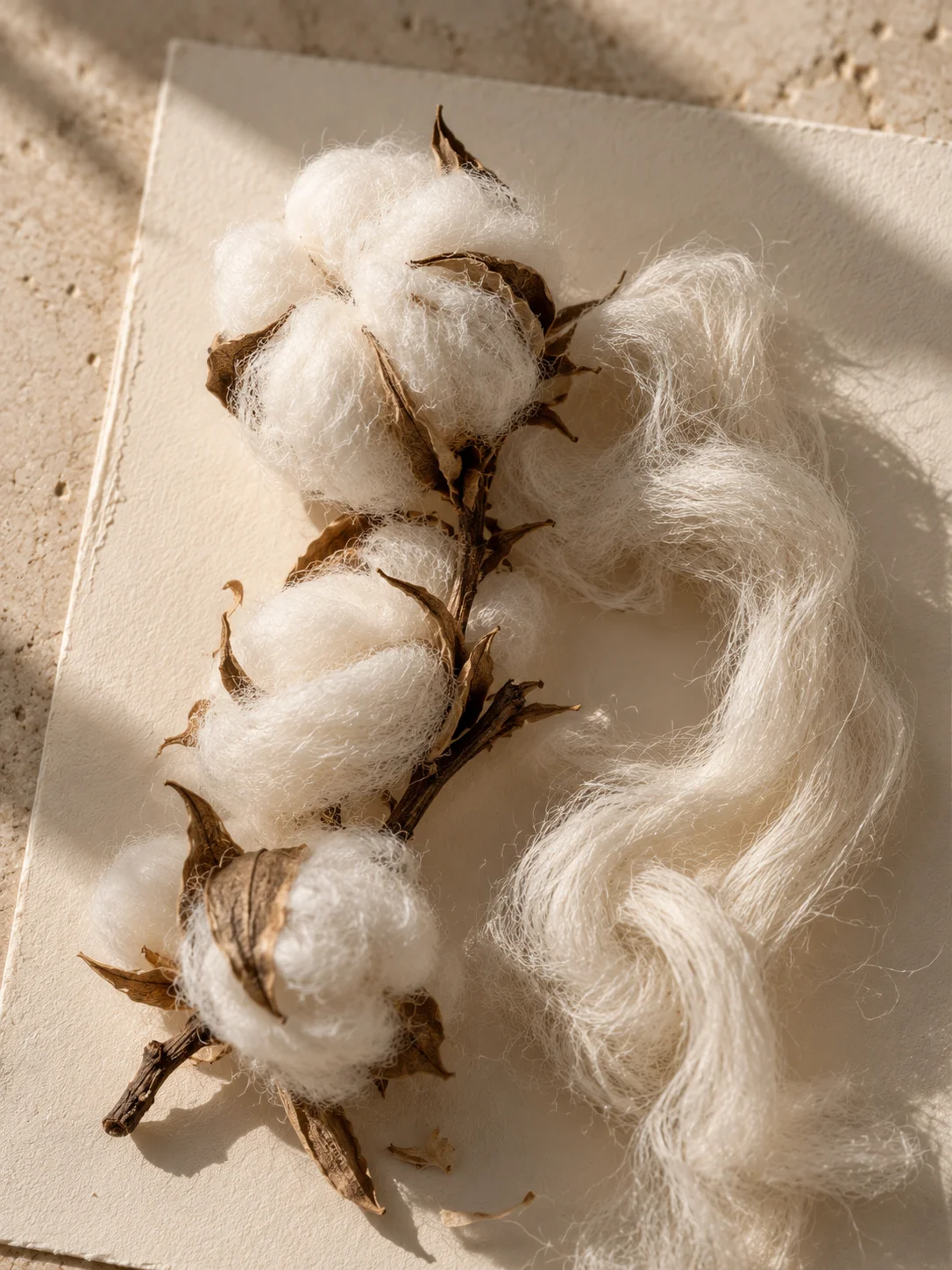
Before there is fabric, there is fibre.
Cotton quality can vary significantly depending on characteristics such as fibre length, strength, fineness and uniformity. Longer, stronger fibres can be spun into yarns with desirable characteristics, but the fibre itself is only the starting point.
This is why simply seeing “100% cotton” on a label doesn't tell you everything.
It tells you the fibre content.
It doesn't tell you how carefully that fibre was selected, prepared or transformed into yarn.
For a premium garment, the journey from raw fibre to finished fabric matters.
2. The yarn matters more than most people realise
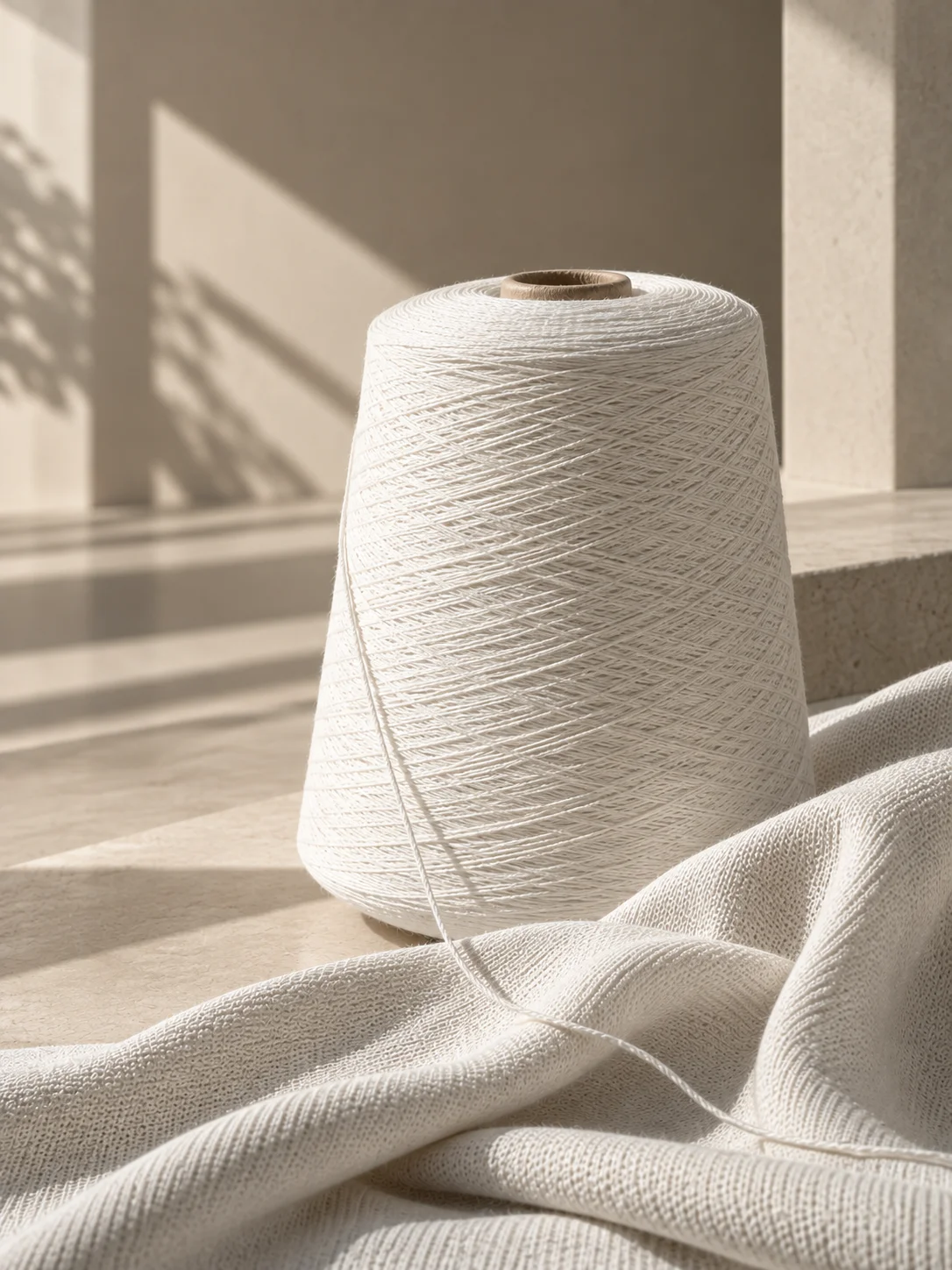
Once fibres are selected, they have to become yarn.
This is one of the least visible parts of clothing production and one of the most important.
Combing can remove shorter fibres and improve fibre alignment, while compact spinning is designed to bring fibres together more closely during yarn formation. These processes can reduce yarn hairiness and contribute to a smoother, more uniform yarn.
That yarn eventually becomes the fabric you touch.
So when a garment feels noticeably smoother or more refined than another garment made from the same broad fibre category, the difference can begin much earlier than the sewing stage.
The fabric you feel is partly the result of the yarn you never see.
3. GSM changes the character of the fabric
GSM means grams per square metre and describes fabric weight.
It is useful, but it is not a quality score.
A higher GSM generally means a heavier fabric, which can provide more body and structure. A lighter fabric may feel more fluid and breathable. Neither is automatically superior because the appropriate weight depends on the garment's purpose.
For an oversized silhouette, for example, a more substantial fabric can help create a cleaner and more structured appearance.
But saying “higher GSM equals better quality” is an oversimplification.
A premium garment is about how all the specifications work together.
4. The surface tells you a lot
Run your hand across a well-made fabric and pay attention to the surface.
Does it feel smooth or excessively hairy? Does it feel clean and consistent? Does it feel soft without feeling weak? Does the surface look refined under light?
These characteristics are influenced by fibre quality, yarn construction, knitting and finishing.
A smoother surface can create the impression of refinement, but softness alone shouldn't be confused with quality.
Some garments are made extremely soft through finishing treatments but may not have the underlying construction you would expect from a premium product.
A premium hand feel should come from the whole fabric system, not just one finishing treatment.
5. Finishing changes what you feel
Fabric doesn't simply come off the knitting machine and become a finished garment.
It can undergo additional processes designed to influence its appearance, softness, stability and hand feel.
Bio-washing, enzyme treatments, silicone finishes and other textile-finishing processes can change how fabric behaves and feels.
This is one reason two fabrics with similar fibre content and GSM can still feel noticeably different.
Finishing is effectively the final refinement layer.
But again, more treatment isn't automatically better.
The goal should be to achieve the intended hand feel and performance without compromising the character of the underlying fabric.
6. Stitching is a detail you shouldn't ignore
You don't need to be a garment technician to notice poor construction.
Look at the seams.
Are the stitches consistent? Are the seam lines clean? Does the collar sit properly? Are loose threads everywhere? Do the panels align correctly?
These details become especially noticeable after repeated wear and washing.
Good construction isn't necessarily dramatic.
In fact, the best construction can be almost invisible because everything simply sits where it should.
That quiet precision is part of what makes a garment feel considered.
7. The collar can reveal the quality of construction
The collar is one of the first areas to experience stretching, pulling and repeated movement.
A well-constructed collar should sit cleanly around the neckline and maintain its intended shape during normal wear.
This doesn't mean every premium T-shirt needs an extremely thick collar.
The right collar depends on the garment's design.
What matters is that the collar proportion, rib structure, stitching and overall construction make sense for the silhouette.
A garment can have excellent fabric and still feel disappointing if the neckline looks poorly constructed.
8. Fit can make good fabric look bad
This is one of the most overlooked parts of premium clothing.
You can use excellent fabric and still produce a garment that doesn't feel premium if the proportions are wrong.
Shoulder width, body width, sleeve length, garment length and neckline all work together.
An oversized garment shouldn't simply look like a regular garment made several sizes larger.
The proportions need to be deliberately designed.
When the fabric and pattern work together, the garment falls naturally and creates the intended silhouette.
That is when quality becomes visible without needing to be explained.
9. Weight, softness and structure need balance
A common mistake is to chase a single sensation.
Some people want the softest possible fabric. Others want the heaviest possible fabric.
But premium clothing isn't necessarily about maximising either.
A fabric can be extremely soft but lack structure. Another can be extremely heavy but uncomfortable. Another can have excellent structure but feel rough.
The objective is balance.
Softness. Structure. Weight. Drape. Comfort.
The best combination depends on what the garment is designed to do.
10. The real test is what happens after repeated wear
A garment shouldn't only feel premium on day one.
The more useful question is what happens after you have worn and washed it repeatedly.
Does the shape remain consistent? Does the collar lose its structure? Does the fabric develop excessive pilling? Does the surface change dramatically? Does the garment still feel comfortable?
Durability depends on many factors, including fibre characteristics, yarn construction, fabric construction, finishing, garment construction and care.
This is why claims such as “premium fabric lasts forever” don't really tell you much.
Quality is better understood as how well the garment performs over time under normal use and care.
So, what actually makes a T-shirt feel premium?
It isn't one magic specification.
It isn't simply 240 GSM.
It isn't simply 100% cotton.
It isn't a luxury logo.
And it certainly isn't the price tag.
A premium-feeling garment is the result of multiple decisions being made correctly.
The fibre provides the foundation.
The yarn determines much of the fabric's character.
The construction influences structure and performance.
The GSM influences weight and body.
The finishing influences the final hand feel.
The stitching determines how the garment is assembled.
The fit determines how everything comes together on the body.
And the quality of all those decisions determines what you experience when you actually wear it.
What VELVETO looks for
At VELVETO, this is the reason we don't want to reduce quality to one specification.
Our approach starts with the material and continues through yarn, fabric, finishing, construction and fit.
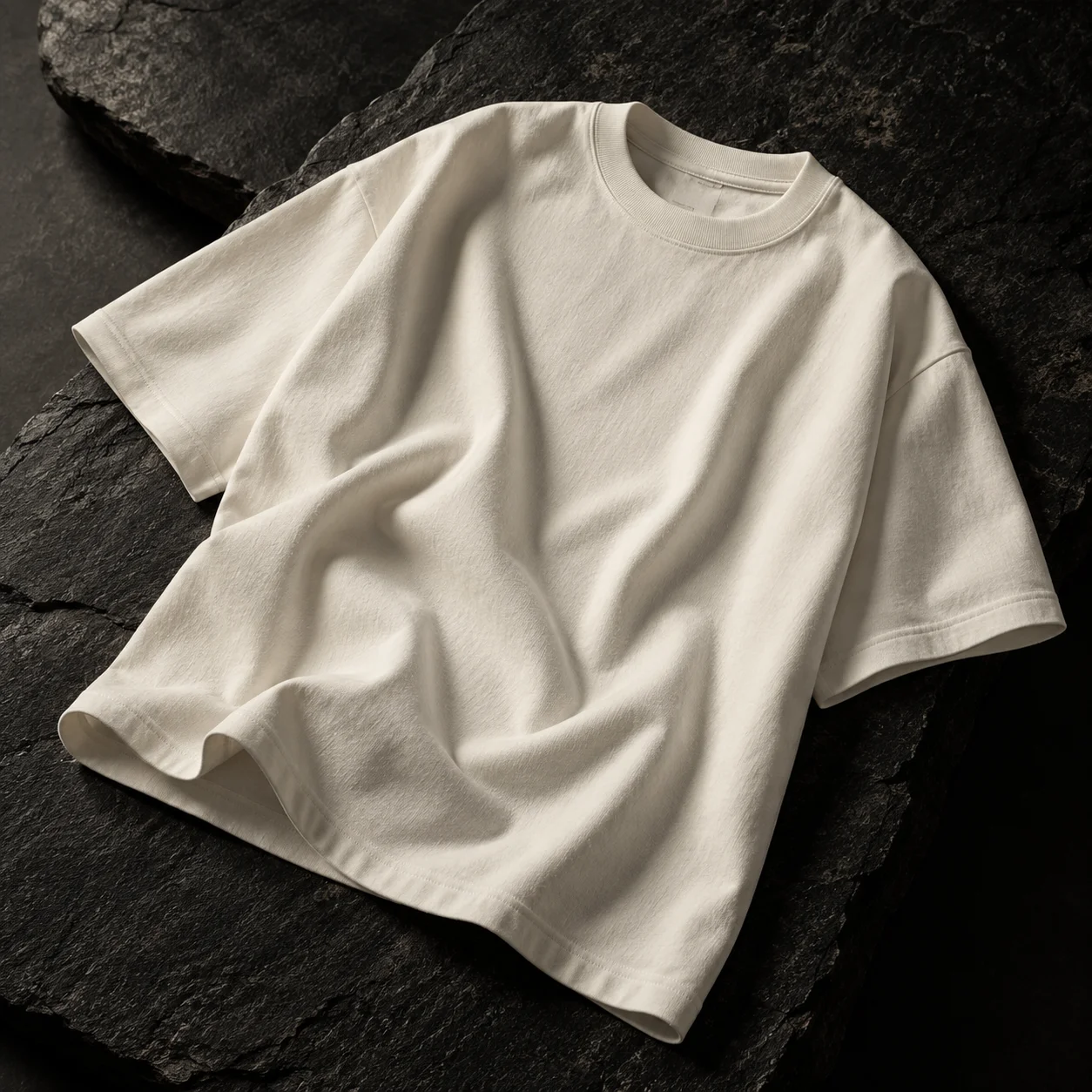
Our current UNISEX T-shirt is built around 100% combed compact cotton, 240 GSM, double bio-wash and a super-soft silicone finish, with a deliberately structured oversized silhouette.
Each specification has a purpose.
The 240 GSM weight contributes substantial body to the silhouette.
The combed compact cotton yarn specification is chosen for a refined fabric foundation.
The finishing is intended to improve the final hand feel.
The fit is designed around the proportions of the garment rather than simply scaling up a regular T-shirt.
None of these details alone makes the garment premium.
Together, they create the experience we're trying to build.
The next time you buy a “premium” T-shirt
Don't start with the logo.
Start with the fabric.
Ask what the fibre is. Look at the yarn specification if it is provided. Check the GSM. Look at the stitching. Examine the collar. Understand the measurements. Think about the intended fit.
Then ask the simplest question of all:
Does the garment actually feel as considered as the price suggests?
Because premium clothing shouldn't need to shout.
You should be able to notice the difference.
Luxury should be felt, not announced.